When powerful earthquakes struck Naval Air Weapons Station (NAWS) China Lake in July 2019, they caused billions of dollars in damage and rendered key laboratories and test facilities unusable. In response, the Navy launched a multi-year, multi-billion-dollar earthquake recovery program to restore and modernize one of its most critical weapons development and test centers.
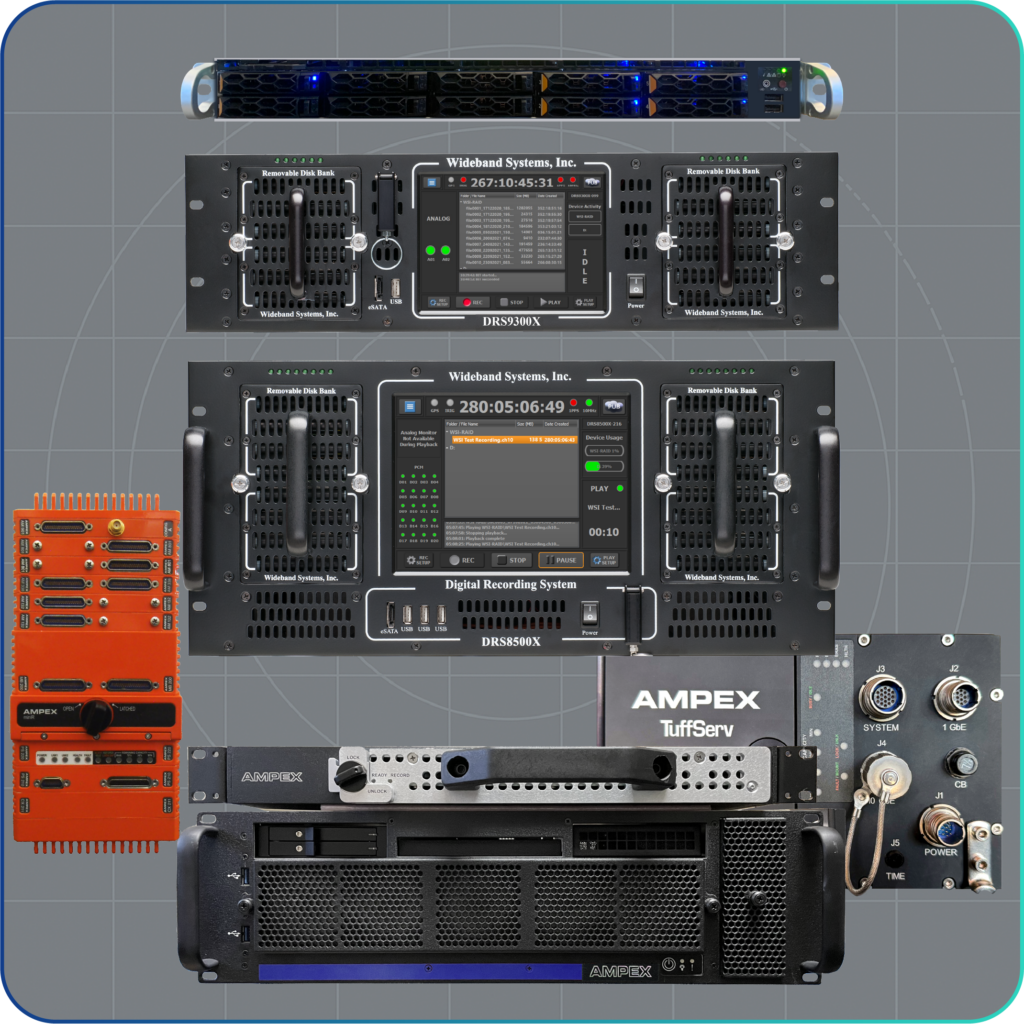
As part of that effort, a new telemetry mission lab, RCC 2.0, was established to replace damaged legacy facilities and provide a modern, flexible environment for current and future test programs. Delta Telemetry Systems (DTS) is proud to support RCC 2.0 with the GDP Series 9200 Data Conversion & Distribution System and Wideband Systems DRS8500X Telemetry Recorders, forming a key part of the upgraded range infrastructure.
From Earthquake Damage to a Modern TM Lab
The earthquakes at China Lake did more than crack walls and damage buildings. They also exposed how much of the underlying infrastructure was built around aging, hard-wired telemetry systems that were difficult to maintain and even harder to reconfigure for new programs.
RCC 2.0 was conceived not just as a replacement for the old telemetry lab, but as an opportunity to build a more adaptable, modular TM environment. The Navy needed a lab that could:
- Support a wide range of weapons and flight test programs
- Handle diverse signal types and formats cleanly
- Be reconfigured quickly between programs without extensive rewiring
- Improve reliability, maintainability, and visibility across the telemetry chain
- Scale to future data rates and mission demands
That is where the GDP 9200 and Wideband DRS8500X Recorders come in.
Telemetry Backbone for RCC 2.0
RCC 2.0 needed a telemetry backbone that could convert, distribute, and record a mix of signal types without more boxes, patch fields, and rewiring. The solution: a unified, modular layer built around GDP 9200 and Wideband recorders.
GDP 9200: Conversion & Distribution Hub
 The GDP 9200 Series Data Conversion & Distribution System serves as the lab’s central signal “switchboard”:
- Handling multiple interfaces (TTL, RS-422, fiber, and other telemetry signals)
- Converting and fanning signals out to recorders, processors, and displays
- Replacing spaghetti patch panels with a clean, configurable chassis
Wideband Recorders: High-Rate Capture
 Behind the DRS8500X Recorder, Wideband Systems provide high-rate, high-capacity mission recording with:
- Full-rate, lossless telemetry capture
- Time-accurate recording with synchronized metadata
- Flexible replay into processing and visualization tools
What This Delivers for RCC 2.0
Together, the GDP Data Conversion & Distribution System and the Wideband Recorders give RCC 2.0:
- Faster reconfiguration for new programs
- Less rack clutter and simpler wiring
- Improved reliability and an easy path to scale as data rates and formats grow
Delta Telemetry Systems: A Partner in Range Modernization
RCC 2.0 is one piece of a much larger effort to restore and enhance NAWS China Lake after the 2019 earthquakes, and Delta Telemetry Systems is honored to play a role in that modernization.
By bringing together GDP and Wideband Systems under the DTS umbrella, we provide integrated telemetry infrastructure that helps ranges and labs like RCC 2.0 move from legacy gear to modern, modular architectures.
If you are planning a lab or range upgrade and would like to explore how the GDP Data Conversion & Distribution System and Wideband Recorders can support your mission, reach out to us today.